
History of the Math
Every formula in the toolbox was somebody's life work. Here they are in order — 487 milestones and 233 people, from 3000 BCE to 2019, each linked to the calculators that run on their work.
The names you keep meeting
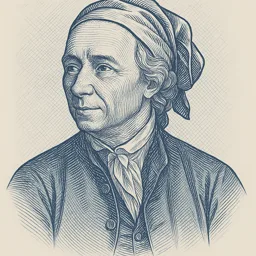
The most prolific mathematician in history; his notation underlies most of engineering.
11 calculators
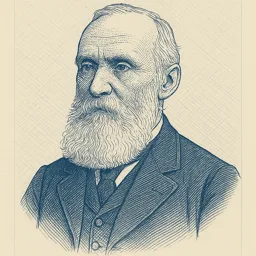
Laid the transatlantic cable's math and an absolute temperature scale carries his name.
10 calculators
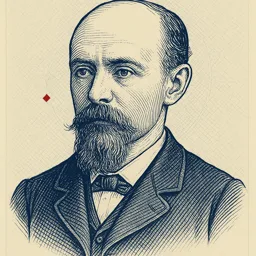
Self-taught telegraph engineer who reformulated Maxwell and gave us operational calculus.
9 calculators
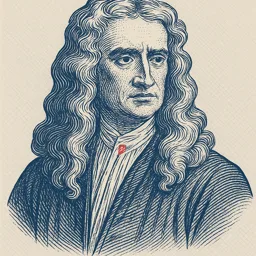
Motion, gravitation, and the calculus — the foundation the rest build on.
7 calculators
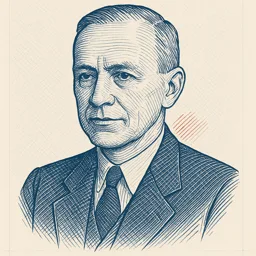
Bell Labs radio engineer; the transmission and noise-figure formulas are his.
6 calculators

Posed the first serious beam-strength problem — brilliantly, and wrongly.
5 calculators
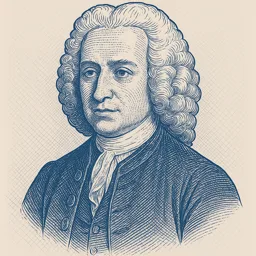
Gave fluid dynamics its founding pressure–velocity relation.
5 calculators
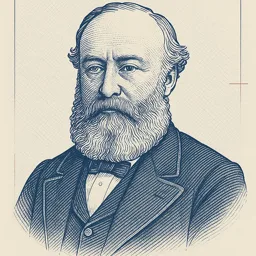
Brewer's son who proved heat is a form of energy; the joule is his.
5 calculators
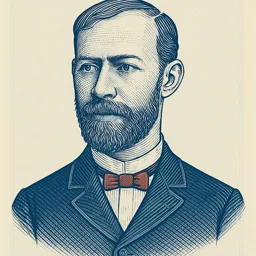
Generated and measured radio waves on a lab bench, proving Maxwell right.
5 calculators
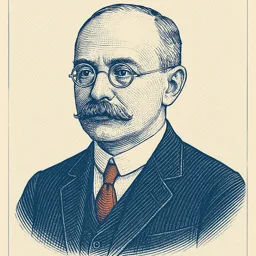
Father of modern aerodynamics; boundary-layer theory is his.
5 calculators
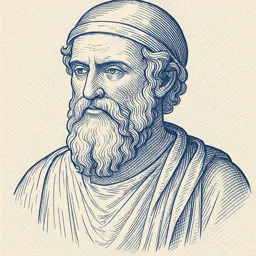
Buoyancy, levers, and the mechanics the ancient world never surpassed.
4 calculators
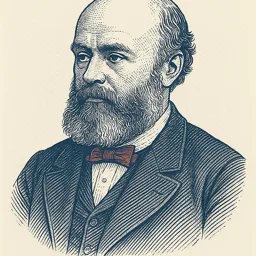
Founding thermodynamicist and soil-mechanics pioneer; a temperature scale bears his name.
4 calculators
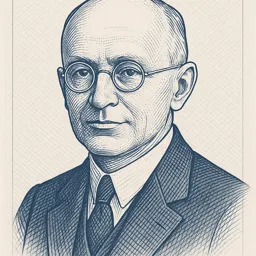
Father of modern engineering mechanics; wrote the textbooks a century used.
4 calculators
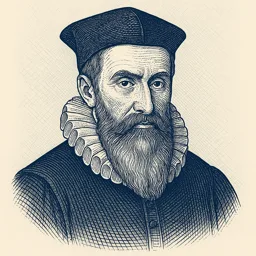
Invented logarithms — the machinery under every decibel.
3 calculators
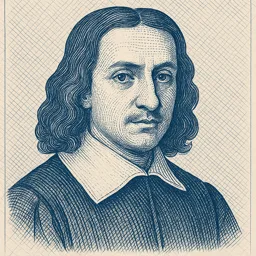
Invented the barometer and explained atmospheric pressure.
3 calculators
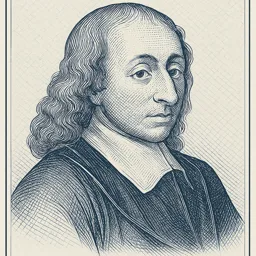
Proved air pressure falls with altitude; the pascal is his.
3 calculators
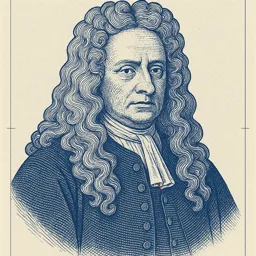
Elasticity's founder: as the extension, so the force.
3 calculators
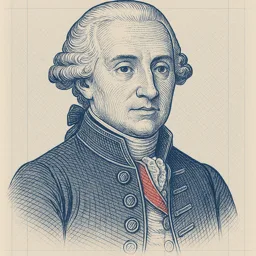
Quantified friction and electrostatic force.
3 calculators
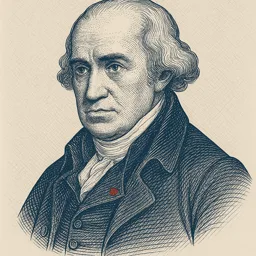
Improved the steam engine and defined horsepower to sell it.
3 calculators
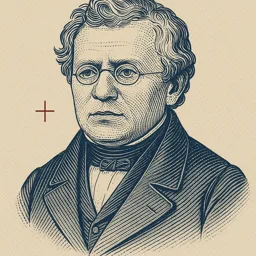
Cologne schoolteacher whose law of resistance was first ridiculed, then immortalized.
3 calculators
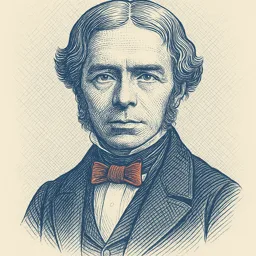
Electromagnetic induction and the groundwork for the field concept.
3 calculators
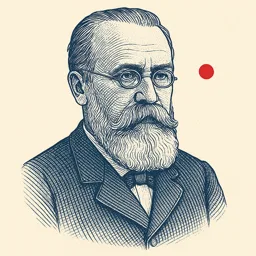
Studied shock waves; the speed-of-sound ratio is named for him.
3 calculators
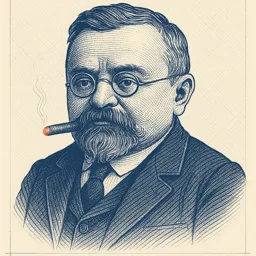
Made AC calculation routine with the complex-phasor method.
3 calculators
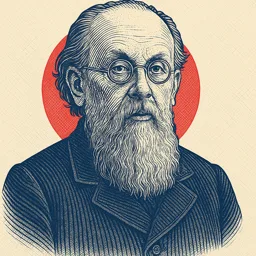
Deaf Russian schoolteacher who wrote the rocket equation before rockets.
3 calculators
233 people in all — every one has a page. 73 with portraits and bios so far.
The blueprint timeline poster
487milestones and a dozen illustrated portraits on one 18×24″ blueprint print — from Archimedes to the new SI. Print it for the lab wall.
The timeline
by industry · 487 milestonesScroll or use +/− to zoom · drag to pan · click a dot for detail. 441 of 487 milestones in view.
The full record
Every milestone in order — the same data the timeline above draws from.
3000s BCE
- 3000 BCEMesopotamian potters (circa)
The potter's wheel — inertia smooths intermittent power.
→ Flywheel Kinetic Energy
300s BCE
- 250 BCEArchimedes (circa)
Law of the lever proven from first principles.
→ Lever Mechanical Advantage - 250 BCEArchimedes
Law of the lever — moment as force times arm.
→ Torque Converter - 250 BCEArchimedes
Areas and volumes of curved figures — the segment's ancestry (circa).
→ Horizontal Tank Volume - 250 BCEArchimedes
Volume of the cylinder — the formula, permanently (circa).
→ Vertical Tank Volume
200s BCE
- 140 BCEHipparchus of Nicaea
Chord tables lock in the 360° Babylonian circle.
→ Angle Converter
100s BCE
- 100 BCEGreek artisans (circa)
Antikythera mechanism — geared ratios compute the heavens.
→ Gear Ratio
15th century
- 1493Leonardo da Vinci (circa)
Friction laws found experimentally — and left in notebooks.
→ Friction Force
16th century
- 1500Leonardo da Vinci
Observes the area–velocity trade in channels (circa).
→ Pipe Flow Velocity - 1537Niccolò Tartaglia
'Nova Scientia' — 45° named the range-maximizing elevation.
→ Projectile Range (No Drag) - 1574William Bourne
Chip log described — speed counted in literal knots.
→ Speed Converter
17th century
- 1602Galileo Galilei (circa)
Isochronism of small swings observed.
→ Pendulum Period - 1614John Napier
Publishes the first logarithm tables — the mathematical machinery under every dB.
→ dB Converter - 1614John Napier
Logarithms — the machinery.
→ dB Voltage Ratio - 1614John Napier
Logarithms — arithmetic for multiplicative quantities.
→ Power Sum in dBm - 1615Johannes Kepler
Nova stereometria — wine-barrel gauging done with proto-calculus.
→ Horizontal Tank Volume - 1619Johannes Kepler
Third law: T² ∝ r³.
→ Circular Orbit Velocity & Period - 1628Benedetto Castelli
States Q = A·V — continuity as a law.
→ Pipe Flow Velocity - 1638Galileo Galilei
Poses the cantilever strength problem in Two New Sciences — brilliantly, and wrongly.
→ Beam Deflection - 1638Galileo Galilei
Projectile path proven parabolic.
→ Projectile Range (No Drag) - 1638Galileo Galilei
The cantilever problem posed — beam strength becomes science.
→ Rectangular Section Modulus - 1638Galileo Galilei
Air resistance identified as why falling bodies differ.
→ Terminal Velocity - 1643Evangelista Torricelli
Mercury barometer — pressure measured as a column height.
→ Pressure Converter - 1643Evangelista Torricelli
The barometer — pressure measured as fluid height.
→ Pump Head ⇄ Pressure - 1644Evangelista Torricelli
Efflux law — the √ in the formula.
→ Orifice Flow - 1648Blaise Pascal & Florin Périer
Puy de Dôme experiment proves pressure falls with altitude.
→ Standard Atmosphere - 1648Blaise Pascal & Florin Périer
Puy de Dôme experiment: pressure falls with altitude.
→ Pressure Converter - 1653Blaise Pascal
Pressure transmits equally in a confined fluid.
→ Hydraulic Cylinder Force - 1656Christiaan Huygens
Pendulum clock — timekeeping improves a hundredfold.
→ Pendulum Period - 1662Robert Boyle
P·V constant at fixed temperature.
→ SCFM ⇄ ACFM - 1662Robert Boyle
PV = constant at fixed temperature.
→ Ideal Gas Law (PV = nRT) - 1673Christiaan Huygens
Compound pendulum solved — rotational inertia in practice.
→ Mass Moment of Inertia (Shapes) - 1676Ole Rømer
First demonstration that light has a finite speed, from Jupiter's moons.
→ Frequency ⇄ Wavelength - 1678Robert Hooke
'Ut tensio, sic vis' — the linear spring law published.
→ Coil Spring Rate - 1678Robert Hooke
Linear elasticity — 'ut tensio, sic vis'.
→ Axial Stress & Strain - 1678Robert Hooke
The linear spring — the oscillator's restoring force.
→ Natural Frequency (Spring–Mass) - 1686Gottfried Leibniz
Vis viva — motion's measure proportional to v².
→ Kinetic Energy - 1687Pierre Varignon
Theorem of moments — lever law becomes general statics.
→ Lever Mechanical Advantage - 1687Isaac Newton
Principia adds drag — and takes the parabola away.
→ Projectile Range (No Drag) - 1687Isaac Newton
First theoretical sound speed (air) in the Principia.
→ Speed of Sound in Materials - 1687Isaac Newton
Principia — resistance proportional to V².
→ Drag Force - 1687Isaac Newton
V² drag regime quantified.
→ Terminal Velocity - 1687Isaac Newton
Orbits derived from gravitation; the cannonball argument.
→ Circular Orbit Velocity & Period - 1687Isaac Newton
The cannonball argument defines escape.
→ Escape Velocity - 1687Isaac Newton
Principia embeds moments in the laws of motion.
→ Torque Converter - 1694Jacob Bernoulli
Links beam curvature to bending moment.
→ Beam Deflection - 1699Guillaume Amontons
Friction laws published: load-proportional, area-independent.
→ Friction Force
18th century
- 1707Queen Anne statute
231 in³ wine gallon — ancestor of the US gallon.
→ Volumetric Flow Converter - 1707Queen Anne statute
231 in³ wine gallon — still the US gallon.
→ Area & Volume Converter - 1713Antoine Parent
Neutral axis located correctly.
→ Rectangular Section Modulus - 1714Roger Cotes
Identifies the natural (radian) measure of angle.
→ Angle Converter - 1724Daniel Gabriel Fahrenheit
Reproducible mercury thermometers and the °F scale.
→ Temperature Converter - 1726John Harrison
Gridiron pendulum cancels expansion with brass against steel.
→ Linear Thermal Expansion - 1727J. T. Desaguliers
Early quantified ventilation — air per occupant (circa).
→ Airflow Units (CFM ⇄ m³/h ⇄ L/s) - 1732Henri Pitot
The pitot tube measures flow by its dynamic pressure.
→ Dynamic Pressure (q) - 1738Daniel Bernoulli
Hydrodynamica — ½ρV² enters the pressure budget.
→ Dynamic Pressure (q) - 1738Daniel Bernoulli
Hydrodynamica — the pressure-velocity-height budget.
→ Bernoulli Pressure Change - 1738Daniel Bernoulli
Pressure-to-velocity budget underpinning the meter.
→ Orifice Flow - 1738Daniel Bernoulli
Hydrodynamica — head, velocity, and pressure unified.
→ Pump Head ⇄ Pressure - 1740Émilie du Châtelet
'Institutions de Physique' unites theory with the clay-ball experiments.
→ Kinetic Energy - 1742Anders Celsius
Centigrade scale proposed (inverted; flipped by 1745).
→ Temperature Converter - 1744Leonhard Euler
Critical buckling load derived via calculus of variations.
→ Euler Column Buckling - 1745von Kleist & van Musschenbroek
The Leyden jar — first capacitor, discovered twice.
→ Capacitor Energy & Charge - 1745Ewald von Kleist / Pieter van Musschenbroek
The Leyden jar — capacitive energy storage.
→ Hold-Up Capacitor Sizing - 1748Leonhard Euler
Circular-function machinery — ω = 2πf.
→ Frequency ⇄ Period - 1748Leonhard Euler
e and the exponential function formalized.
→ RC Charge Time - 1750Leonhard Euler & Daniel Bernoulli
The Euler–Bernoulli beam equation — the math under this card.
→ Beam Deflection - 1752Benjamin Franklin
Charge conservation analysis of the jar.
→ Capacitor Energy & Charge - 1754Leonhard Euler
Involute tooth profile analyzed — the modern gear tooth.
→ Gear Ratio - 1754Leonhard Euler
Euler's turbomachine equation.
→ Pump Hydraulic & Shaft Power - 1754Leonhard Euler
Turbomachine equation — pumps deliver head, not pressure (circa).
→ Pump Head ⇄ Pressure - 1756John Smeaton
Hydraulic lime identified for the Eddystone Lighthouse — modern concrete's starting gun.
→ Concrete Slab Volume - 1757Leonhard Euler
Equations of compressible fluid motion.
→ Isentropic Flow Ratios - 1757Leonhard Euler
Continuity embedded in the general flow equations.
→ Pipe Flow Velocity - 1757Leonhard Euler
The equation in its modern form.
→ Bernoulli Pressure Change - 1760Joseph Black
Specific and latent heat distinguished (circa).
→ Heat Exchanger Duty - 1765Leonhard Euler
'Moment of inertia' defined; rigid-body dynamics founded.
→ Mass Moment of Inertia (Shapes) - 1766Jean-Charles de Borda
Vena contracta explains C_d ≈ 0.61.
→ Orifice Flow - 1775Antoine de Chézy
First slope–radius channel formula (circa).
→ Manning Open-Channel Flow - 1776Charles-Augustin de Coulomb
Wedge theory of earth pressure — soil mechanics begins.
→ Rankine Earth Pressure - 1780James Pickard
Crank-and-flywheel patent turns steam strokes into rotation.
→ Flywheel Kinetic Energy - 1781Henry Cavendish
Measures V–I proportionality using shocks to his own body; never publishes.
→ Ohm's Law - 1782Lavoisier & Laplace (circa)
Systematic dilatometer measurements of expansion coefficients.
→ Linear Thermal Expansion - 1782James Watt
Horsepower defined — pumping becomes a priced commodity.
→ Pump Hydraulic & Shaft Power - 1783James Watt
Defines the horsepower to price steam engines against horses.
→ Shaft Power ⇄ Torque - 1783James Watt
Defines the horsepower to sell steam engines against horses.
→ Power Converter - 1784Charles-Augustin de Coulomb
Torsion of wires quantified — the torsion balance.
→ Shaft Torsion (Solid Round) - 1785Charles-Augustin de Coulomb
Static vs kinetic friction; the engineering model completed.
→ Friction Force - 1787Ernst Chladni
Sound velocities in solids from resonating rods and plates.
→ Speed of Sound in Materials - 1788Joseph-Louis Lagrange
'Mécanique analytique' — virtual work subsumes the lever.
→ Lever Mechanical Advantage - 1789Antoine Lavoisier
Conservation of mass — the bookkeeping behind dilution.
→ Dilution (C₁V₁ = C₂V₂) - 1793French Republic (Delambre & Méchain survey)
Metre defined from the Earth's meridian.
→ Length Converter - 1793French metric commission
Gradian — the right angle decimalized to 100.
→ Angle Converter - 1795Joseph Bramah
Hydraulic press patented — force multiplication by area.
→ Hydraulic Cylinder Force - 1795French Republic
The metre — the metric flow units' ancestor.
→ Airflow Units (CFM ⇄ m³/h ⇄ L/s) - 1795French Republic
Litre defined as the cubic decimeter.
→ Area & Volume Converter - 1796Pierre-Simon Laplace
'Dark stars' — escape velocity meets light speed (circa).
→ Escape Velocity - 1797G. B. Venturi
The converging-diverging meter principle.
→ Bernoulli Pressure Change - 1797André-Jacques Garnerin
First parachute descent from a balloon.
→ Terminal Velocity - 1797Giovanni Battista Venturi
Constricted-tube effect behind flow metering.
→ Volumetric Flow Converter - 1798Count Rumford
Cannon-boring: friction makes heat without limit.
→ Energy Converter - 1799French Academy
Platinum Mètre des Archives deposited.
→ Length Converter - 1799French Academy
Kilogramme des Archives — the kilogram realized.
→ Mass & Force Converter
19th century
- 1800Alessandro Volta
The voltaic pile — the first battery.
→ Battery Life - 1800Alessandro Volta
The pile — cells in series, the first battery.
→ Battery Pack Configuration - 1801Textile mill era (circa)
Flat-belt line shafting becomes the standard factory transmission.
→ Belt & Pulley Speed - 1802Gay-Lussac (crediting Charles)
Volume–temperature law.
→ SCFM ⇄ ACFM - 1802Joseph Gay-Lussac
Volume–temperature law published (crediting Charles).
→ Ideal Gas Law (PV = nRT) - 1802John Dalton
Partial pressures and the saturation curve of water vapor.
→ Dew Point & Absolute Humidity - 1804Jean-Baptiste Biot
Early experiments on conduction in bars (circa).
→ Heat Conduction (Fourier) - 1805Pierre-Simon Laplace
The barometric formula — pressure vs. height, mathematically.
→ Standard Atmosphere - 1807Thomas Young
Elastic modulus defined as a material property.
→ Axial Stress & Strain - 1808Jean-Baptiste Biot
Times sound racing through an iron water main vs air.
→ Speed of Sound in Materials - 1811Amedeo Avogadro
Equal volumes, equal molecules — n enters the equation.
→ Ideal Gas Law (PV = nRT) - 1811Amedeo Avogadro
Molar volume concept — density becomes PM/RT.
→ Gas Density - 1813William Moore
Early derivation of rocket motion — forgotten for a century.
→ Tsiolkovsky Rocket Equation - 1817Henry Kater
Reversible pendulum measures g with precision.
→ Pendulum Period - 1818Augustin-Jean Fresnel
Zone construction in the prize memoir on diffraction.
→ Fresnel Zone Clearance - 1820Thomas Tredgold
'Principles of Carpentry' — section design for practitioners.
→ Rectangular Section Modulus - 1820John McAdam
Macadam road construction — engineered aggregate layers (circa).
→ Aggregate Tonnage - 1821Gaspard de Prony
Prony brake — the first practical shaft-power dynamometer.
→ Shaft Power ⇄ Torque - 1822Augustin-Louis Cauchy
The stress tensor — stress made rigorous.
→ Axial Stress & Strain - 1822Joseph Fourier
Théorie analytique de la chaleur — heat flow proportional to ΔT.
→ Log-Mean Temperature Difference - 1822Joseph Fourier
Théorie analytique de la chaleur — the law and the series.
→ Heat Conduction (Fourier) - 1824UK Parliament
Imperial gallon defined — the US/imperial fork is permanent.
→ Volumetric Flow Converter - 1824Joseph Aspdin
Patents Portland cement.
→ Concrete Slab Volume - 1824Joseph Gay-Lussac
Volumetric analysis; the burette and pipette named (circa).
→ Dilution (C₁V₁ = C₂V₂) - 1826Claude-Louis Navier
Turns beam theory into usable engineering design formulas.
→ Beam Deflection - 1826Claude-Louis Navier
Linear bending theory: σ = M·c/I.
→ Rectangular Section Modulus - 1827Georg Simon Ohm
Publishes Die galvanische Kette — V = IR, to initial ridicule.
→ Ohm's Law - 1827Georg Simon Ohm
V = IR — the law the divider applies twice.
→ Voltage Divider - 1827Georg Simon Ohm
Resistance defined — the quantity being combined.
→ Parallel Resistors - 1827Georg Ohm
Die galvanische Kette — V = IR.
→ Wire Voltage Drop - 1829Gaspard-Gustave de Coriolis
Work defined; the ½mv² form fixed.
→ Kinetic Energy - 1831Michael Faraday
Electromagnetic induction — the transformer's physics.
→ Transformer Turns Ratio - 1832Joseph Henry
Self-induction discovered (the henry remembers him).
→ Inductor Energy - 1833Samuel Hunter Christie
Invents the four-arm bridge circuit.
→ Wheatstone Bridge - 1833Lamé & Clapeyron
Exact thick-cylinder stress solution published.
→ Thin-Wall Pressure Vessel Stress - 1833Michael Faraday
Negative temperature coefficient observed in Ag₂S — the first semiconductor effect.
→ Inrush Limiter (NTC) Sizing - 1834Louis Poinsot
Geometric picture of free rotation — the inertia ellipsoid.
→ Mass Moment of Inertia (Shapes) - 1834Émile Clapeyron
Combined ideal gas equation PV = nRT.
→ SCFM ⇄ ACFM - 1834Émile Clapeyron
Combines the laws into PV = nRT.
→ Ideal Gas Law (PV = nRT) - 1837Michael Faraday
Dielectrics and the measure of capacitance.
→ Capacitor Energy & Charge - 1840Moritz von Jacobi
Maximum power transfer theorem — why matching matters.
→ L-Network Impedance Match - 1841James Prescott Joule
Quantifies electrical heating — the P = VI power relation.
→ Ohm's Law - 1841Royal Society
Awards Ohm the Copley Medal; the law finally sticks.
→ Ohm's Law - 1841James Prescott Joule
I²R heating — the physical meaning of RMS.
→ RMS ⇄ Peak ⇄ Peak-to-Peak - 1841Robert Willis
'Principles of Mechanism' systematizes gear-train kinematics.
→ Gear Ratio - 1842Christian Doppler
Proposes the frequency shift of moving sources.
→ Doppler Shift - 1842Julius Robert Mayer
States the mechanical equivalent of heat.
→ Energy Converter - 1843Charles Wheatstone
Bakerian Lecture popularizes the bridge (crediting Christie).
→ Wheatstone Bridge - 1843James Prescott Joule
Falling-weight experiments price mechanical energy in heat.
→ Gravitational Potential Energy - 1843James Prescott Joule
Paddle-wheel experiments price heat in work, refined through 1850.
→ Energy Converter - 1843James Prescott Joule
Mechanical equivalent of heat — energy accounting unified.
→ Heat Exchanger Duty - 1844Heinrich Gustav Magnus
The Magnus saturation-vapor-pressure formula.
→ Dew Point & Absolute Humidity - 1845Gustav Kirchhoff
Circuit laws, published at age 21, formalize series-parallel analysis.
→ Voltage Divider - 1845Gustav Kirchhoff
Current law — why parallel conductances add.
→ Parallel Resistors - 1845C.H.D. Buys Ballot
Confirms it with musicians on a moving train.
→ Doppler Shift - 1845Julius Weisbach
Modern head-loss equation with f.
→ Pipe Pressure Drop (Darcy-Weisbach) - 1845Henri Victor Regnault
Precision gas-density measurements (circa).
→ Gas Density - 1846William Armstrong
Hydraulic crane launches industrial fluid power.
→ Hydraulic Cylinder Force - 1847Hermann von Helmholtz
Conservation of energy stated in full generality.
→ Gravitational Potential Energy - 1848William Thomson (Kelvin)
Absolute thermodynamic temperature scale.
→ Temperature Converter - 1849Eugène Bourdon
Bourdon-tube gauge puts a pressure dial on every boiler.
→ Pressure Converter - 1850William Thomson (circa)
The term 'kinetic energy' coined.
→ Kinetic Energy - 1851Heinrich Ruhmkorff
Induction coil — stored magnetic energy as a product.
→ Inductor Energy - 1851Léon Foucault
Pendulum demonstrates the Earth's rotation.
→ Pendulum Period - 1851George Gabriel Stokes
Viscous-flow theory — the µ in the denominator.
→ Reynolds Number - 1851John Appold
Curved-vane impeller shows efficiency is design, not luck.
→ Pump Hydraulic & Shaft Power - 1853Lord Kelvin
Predicts LC oscillation mathematically.
→ LC Resonant Frequency - 1853William Rankine
The term 'potential energy' coined.
→ Gravitational Potential Energy - 1853Lord Kelvin
LC oscillation predicted — the reactive tug-of-war.
→ Series RLC Impedance - 1855Lord Kelvin
RC law of the telegraph cable — the time constant's debut.
→ RC Low-Pass Filter - 1855Lord Kelvin
RC transient law from telegraph cable theory.
→ RC Charge Time - 1855Saint-Venant
General torsion theory; circular-section formula's limits mapped.
→ Shaft Torsion (Solid Round) - 1856Lord Kelvin
Discovers resistance changes with strain.
→ Strain Gauge Output - 1857Henry Darcy
Dijon experiments make roughness part of the law.
→ Pipe Pressure Drop (Darcy-Weisbach) - 1857William Rankine
Stress-state earth pressure theory; Ka in closed form.
→ Rankine Earth Pressure - 1857J. R. Brown & Lucian Sharpe
Brown & Sharpe gauge — the geometric series adopted as AWG.
→ Wire Gauge (AWG) Properties - 1857Brown & Sharpe
AWG standardizes the copper in the denominator.
→ Wire Voltage Drop - 1858Luigi Menabrea
Early analysis of pipe-surge pressure (circa).
→ Water Hammer (Joukowsky) - 1859Gaston Planté
Rechargeable lead-acid cell.
→ Battery Life - 1859Berend Feddersen
Photographs oscillatory spark discharge — theory confirmed.
→ LC Resonant Frequency - 1859William Rankine
Fahrenheit-sized absolute scale for engineering.
→ Temperature Converter - 1859Gaston Planté
Lead-acid rechargeable cell; the 12 V series string to come.
→ Battery Pack Configuration - 1861Lord Kelvin
Double bridge extends null measurement to milliohms.
→ Wheatstone Bridge - 1861Lord Kelvin
Four-terminal (Kelvin) sensing removes lead error.
→ Shunt Resistor - 1865James Clerk Maxwell
Field equations predict EM waves at the speed of light.
→ Frequency ⇄ Wavelength - 1865Sultana boiler explosion
Deadliest US maritime disaster — steam's cost made plain.
→ Thin-Wall Pressure Vessel Stress - 1867Philippe Gauckler
Proposes the 2/3-power law.
→ Manning Open-Channel Flow - 1867Joseph Monier
Patents wire-reinforced concrete — planters first, structures soon after.
→ Concrete Column Volume - 1867Joseph Monier
Reinforced concrete patented — steel goes into the pour.
→ Rebar Weight - 1869William Rankine
Whirling speed identified — and supercritical running wrongly forbidden.
→ Shaft Critical Speed (Deflection Method) - 1870William J. M. Rankine
Shock jump conditions from thermodynamics.
→ Normal Shock Relations - 1873James Clerk Maxwell
Field-energy formulation — ½LI² formalized.
→ Inductor Energy - 1873James Thomson
Coins 'radian' at Queen's College Belfast.
→ Angle Converter - 1876Lord Rayleigh
Dimensionless resistance coefficient (circa).
→ Drag Force - 1877Lord Rayleigh
'Theory of Sound' founds engineering vibration analysis.
→ Natural Frequency (Spring–Mass) - 1877Charles Renard
Preferred-number series — geometric sizing of standard parts.
→ Nearest E-Series Value - 1880Oliver Heaviside
Coaxial cable patented.
→ Coax Loss & Power Out - 1880Oliver Heaviside
Coaxial line patented.
→ Coax Impedance from Dimensions - 1883Léon Charles Thévenin
Equivalent-circuit theorem — the divider's output impedance.
→ Voltage Divider - 1883Horace Lamb
Skin effect derived for spherical conductors.
→ Skin Depth - 1883Osborne Reynolds
Dye-filament experiment finds the transition criterion.
→ Reynolds Number - 1884Edward Weston
Manganin — the near-zero-tempco resistance alloy.
→ Shunt Resistor - 1884John Henry Poynting
Energy flux of the EM field — S itself.
→ RF Power Density - 1884James Thomson
Coins 'torque' for twisting effort in machinery.
→ Torque Converter - 1884Ernest Ransome
Twisted rebar patent; reinforced concrete becomes buildable in America.
→ Concrete Column Volume - 1884Ernest Ransome
Twisted rebar patent — mechanical bond by geometry.
→ Rebar Weight - 1884Jacobus van 't Hoff
Temperature dependence of equilibrium — the exponential form.
→ Arrhenius Rate Ratio - 1885Oliver Heaviside
Operational circuit analysis normalizes the conductance view.
→ Parallel Resistors - 1885Oliver Heaviside
Operational calculus makes filter math tractable.
→ RC Low-Pass Filter - 1885Oliver Heaviside
Transmission-line theory — reflections quantified.
→ VSWR / Return Loss / Γ - 1885Oliver Heaviside
General conductor case; the effect named and tamed.
→ Skin Depth - 1885Zipernowsky, Bláthy & Déri
Closed-core practical transformer.
→ Transformer Turns Ratio - 1885Karl Benz (circa)
Cone clutch on the first automobiles.
→ Plate Clutch Torque (Uniform Wear) - 1886Oliver Heaviside
Names and formalizes inductance; reactive behavior theorized.
→ Reactance (XL / XC) - 1886William Stanley
AC distribution demo at Great Barrington — the grid begins.
→ Transformer Turns Ratio - 1886Oliver Heaviside
Coins 'impedance' for AC opposition.
→ Series RLC Impedance - 1887Heinrich Hertz
Generates and measures radio waves — λf = c confirmed on a lab bench.
→ Frequency ⇄ Wavelength - 1887Oliver Heaviside
Transmission-line theory explains velocity factor in cables.
→ Frequency ⇄ Wavelength - 1887Heinrich Hertz
Resonant circuits generate and detect radio waves.
→ LC Resonant Frequency - 1887Lord Kelvin
AC resistance of practical conductors quantified.
→ Skin Depth - 1887Heinrich Hertz
Measures EM oscillation periods experimentally.
→ Frequency ⇄ Period - 1887Heinrich Hertz
The dipole — the first antenna.
→ Dipole / Whip Length - 1887Pierre-Henri Hugoniot
Independent derivation — the Rankine-Hugoniot relations.
→ Normal Shock Relations - 1887Ernst Mach
Schlieren photograph of a bullet's shock wave.
→ Normal Shock Relations - 1887Ernst Mach
Photographs supersonic shock waves; identifies the speed ratio.
→ Mach Number from Airspeed & Altitude - 1887Clemens Herschel
Commercial venturi meter for waterworks.
→ Bernoulli Pressure Change - 1887Clemens Herschel
Commercial venturi meter — flow becomes a billable number.
→ Volumetric Flow Converter - 1887Ernst Mach
Photographs shock waves; the sonic ratio gets its physics.
→ Speed Converter - 1887Svante Arrhenius
Ionic dissociation theory — concentration becomes physical chemistry.
→ Dilution (C₁V₁ = C₂V₂) - 1887Heinrich Hertz
The dipole — radio's first and reference antenna.
→ ERP ⇄ EIRP - 1888Gustaf de Laval
The converging–diverging nozzle goes supersonic.
→ Isentropic Flow Ratios - 1889British Association
The watt adopted as the unit of power, honoring Watt.
→ Shaft Power ⇄ Torque - 1889Friedrich Engesser
Tangent-modulus theory extends buckling past the elastic range.
→ Euler Column Buckling - 1889Gustaf de Laval
Runs turbine shafts above critical on flexible spindles.
→ Shaft Critical Speed (Deflection Method) - 1889Robert Manning
Presents the formula that takes his name.
→ Manning Open-Channel Flow - 1889British Association
The joule named in Joule's honor.
→ Energy Converter - 1889British Association
The watt named as the unit of power.
→ Power Converter - 1889Svante Arrhenius
Activation energy and the rate equation.
→ Arrhenius Rate Ratio - 1892J. A. Fleming
AC instrument era forces peak-vs-RMS bookkeeping.
→ Crest Factor - 1892François Hennebique
Monolithic reinforced-concrete frame system — column, beam, and slab as one.
→ Concrete Column Volume - 1893Charles Steinmetz
Complex/phasor method tames AC calculation.
→ RMS ⇄ Peak ⇄ Peak-to-Peak - 1893Edward Weston
Portable precision instruments make shunt measurement standard practice.
→ Shunt Resistor - 1893Charles Steinmetz
Complex phasor method — reactance becomes arithmetic.
→ Reactance (XL / XC) - 1893T. C. Mendenhall
US customary units legally defined from the meter.
→ Length Converter - 1893Arthur Kennelly
'Impedance' paper — complex Z formalized.
→ Series RLC Impedance - 1893Charles Steinmetz
Phasor method makes RLC arithmetic routine.
→ Series RLC Impedance - 1894Stanley Dunkerley
Empirical formula for critical speeds of loaded shafts.
→ Shaft Critical Speed (Deflection Method) - 1894Rayleigh & Ramsay
Argon discovered from a 0.5% density anomaly.
→ Gas Density - 1896Niagara Falls plant
AC power transmission wins; RMS becomes the lingua franca.
→ RMS ⇄ Peak ⇄ Peak-to-Peak - 1896Charles-Édouard Guillaume
Invar discovered — near-zero expansion alloy.
→ Linear Thermal Expansion - 1896Henri Becquerel
Radioactivity discovered in uranium salts.
→ Half-Life Decay - 1897Wilhelm Peukert
Capacity vs. discharge-rate law.
→ Battery Life - 1897Oliver Lodge
Patents syntonic (tuned) wireless telegraphy.
→ LC Resonant Frequency - 1897Charles Parsons / Turbinia
Propeller cavitation discovered at sea; first cavitation tunnel.
→ NPSH Available - 1897National Electrical Code
First NEC — wire size becomes a safety regulation, circa.
→ Wire Gauge (AWG) Properties - 1897National Electrical Code
First NEC; drop guidance enters wiring practice, circa.
→ Wire Voltage Drop - 1898Nikolai Joukowsky
ΔP = ρ·a·Δv established on Moscow's mains.
→ Water Hammer (Joukowsky)
20th century
- 1900Harmon S. Palmer
Patents the hollow-block molding machine — the CMU is born.
→ Concrete Block Wall - 1901Guglielmo Marconi
Transatlantic radio makes path loss an engineering question.
→ Free-Space Path Loss - 1901Guglielmo Marconi
Over-the-horizon mystery starts propagation science.
→ Radio / Radar Horizon - 1901Wilbur & Orville Wright
Wind-tunnel lift measurements replace bad tables.
→ Lift Force - 19013rd CGPM
Mass vs weight separated; g₀ = 9.80665 m/s² fixed.
→ Mass & Force Converter - 19013rd CGPM
Litre tied to 1 kg of water — off by 28 ppm.
→ Area & Volume Converter - 1902Léon Teisserenc de Bort
Balloon soundings discover the tropopause and stratosphere.
→ Standard Atmosphere - 1902Richard Stribeck
Systematic ball-bearing load-capacity experiments.
→ Bearing L10 Life - 1902Wilhelm Kutta
Circulation condition at the trailing edge.
→ Lift Force - 1902Lorenzo Allievi
General theory of hydraulic transients.
→ Water Hammer (Joukowsky) - 1902Rutherford & Soddy
Exponential decay law and transmutation theory — the half-life.
→ Half-Life Decay - 1903Aurel Stodola
Measures pressure along a Laval nozzle — theory confirmed (circa).
→ Isentropic Flow Ratios - 1903Konstantin Tsiolkovsky
The rocket equation published, with liquid fuel proposed.
→ Tsiolkovsky Rocket Equation - 1903Konstantin Tsiolkovsky
11.2 km/s framed as spaceflight's price of exit.
→ Escape Velocity - 1903Konstantin Tsiolkovsky
Exhaust velocity identified as rocketry's key metric.
→ Specific Impulse - 1903US refrigeration industry
Ton of refrigeration standardized from melting ice.
→ Power Converter - 1904Ludwig Prandtl
Göttingen program makes supersonic flow an engineering science.
→ Oblique Shock (θ-β-M) - 1904Ludwig Prandtl
Force coefficients normalized by q — modern aerodynamic bookkeeping (circa).
→ Dynamic Pressure (q) - 1904Ludwig Prandtl
Boundary-layer theory explains why Re governs.
→ Reynolds Number - 1904Ludwig Prandtl
Boundary layer explains where drag comes from.
→ Drag Force - 1904Herman Besser
Block-making machinery industrializes; blocks become a commodity.
→ Concrete Block Wall - 1905H. S. Hele-Shaw (circa)
Multi-plate oil-bath clutch developed.
→ Plate Clutch Torque (Uniform Wear) - 1906Nikolai Joukowsky
Lift = ρVΓ — the circulation theorem.
→ Lift Force - 1907H. J. Round
First observation of electroluminescence (SiC).
→ LED Series Resistor - 1907Oscar Kjellberg
Coated stick electrode makes structural arc welds possible.
→ Fillet Weld Throat Stress - 1907Fuller & Thompson
Ideal aggregate gradation curve published.
→ Aggregate Tonnage - 1907H. J. Round
Electroluminescence observed in silicon carbide.
→ LED Array / String Designer - 1908Theodor Meyer
Oblique-shock θ-β-M theory in his dissertation under Prandtl.
→ Oblique Shock (θ-β-M) - 1908Arnold Sommerfeld
Coins the name 'Reynolds number'.
→ Reynolds Number - 1911ASTM
A15 standardizes reinforcing bars; the numbered size system follows.
→ Rebar Weight - 1911Willis Carrier
Rational psychrometric formulae — air conditioning gets its chart.
→ Dew Point & Absolute Humidity - 1912Gustave Eiffel
Wind-tunnel C_d measurements; the drag crisis found.
→ Drag Force - 1913Baltimore ready-mix pioneers
First ready-mixed concrete delivered — the cubic yard becomes a commodity.
→ Concrete Slab Volume - 1913IEC
International Annealed Copper Standard fixes ρ = 1.7241 µΩ·cm.
→ Wire Gauge (AWG) Properties - 1914Kenneth S. Johnson
Coins Q for coil quality at Western Electric (published usage 1920s).
→ Q Factor ⇄ Bandwidth - 1914ASME
Boiler & Pressure Vessel Code — hoop stress becomes law.
→ Thin-Wall Pressure Vessel Stress - 1915Compressed Air Institute era
Industry standard reference conditions emerge (circa).
→ SCFM ⇄ ACFM - 1915Wilhelm Nusselt
Convective heat-transfer theory; LMTD framework matures (circa 1910s).
→ Log-Mean Temperature Difference - 1917John Gates
Rubber V-belt invented — the compact machine drive.
→ Belt & Pulley Speed - 1917Hydraulic Institute
Pump test standards make efficiency claims comparable.
→ Pump Hydraulic & Shaft Power - 1917Hydraulic Institute
Standards body that codified NPSH practice.
→ NPSH Available - 1918Conrad Bahr
Torque wrench invented for NYC water-main flange bolts.
→ Bolt Torque from Preload - 1918Ludwig Prandtl
Lifting-line theory — finite wings computed.
→ Lift Force - 1918Conrad Bahr
Torque wrench patented — tightening becomes a number.
→ Torque Converter - 1918Duff Abrams
Water–cement ratio law; aggregate science enters mix design.
→ Aggregate Tonnage - 1919Henry Jeffcott
Whirling rotor theory — self-centering above resonance explained.
→ Shaft Critical Speed (Deflection Method) - 1919Leslie Irvin
First premeditated free-fall parachute jump — V_t survived by design.
→ Terminal Velocity - 1919Robert Goddard
'A Method of Reaching Extreme Altitudes' — measured nozzle efficiency.
→ Specific Impulse - 1919Henri Abraham & Eugène Bloch
The multivibrator — two-state RC timing circuits.
→ 555 Timer — Astable - 1919Henri Abraham & Eugène Bloch
Multivibrator circuits, including the one-shot.
→ 555 Timer — Monostable - 1920George Campbell / Bell System
Image-parameter network design matures.
→ Pi Attenuator - 1920George Campbell
Two-port image design formalized.
→ T Attenuator - 1920Charles-Édouard Guillaume
Nobel Prize for Invar and precision metrology.
→ Linear Thermal Expansion - 1920George Campbell / Bell System
Image-parameter design; matching becomes systematic.
→ L-Network Impedance Match - 1923Otto Zobel
Systematic matched-network (pad/filter) synthesis.
→ Pi Attenuator - 1923Otto Zobel
Pad synthesis equations in modern form.
→ T Attenuator - 1923Albert Strickler
Roughness coefficient tied to physical wall texture.
→ Manning Open-Channel Flow - 1923Hermann Oberth
'Die Rakete zu den Planetenräumen' — the German school begins.
→ Tsiolkovsky Rocket Equation - 1923Hermann Oberth
The book that made orbital mechanics a movement.
→ Hohmann Transfer - 1924Bell System engineers
Define the Transmission Unit (TU), replacing 'miles of standard cable' with a clean log ratio.
→ dB Converter - 1924ICAN
First international standard atmosphere for aviation.
→ Standard Atmosphere - 1924Arvid Palmgren
Load–life exponent and statistical bearing life at SKF.
→ Bearing L10 Life - 1924ICAN
Standard atmosphere fixes T(h) — Mach from altitude becomes arithmetic.
→ Mach Number from Airspeed & Altitude - 1924Dietrich Thoma
Cavitation similarity number σ (circa).
→ NPSH Available - 1924Bell System
Transmission Unit replaces miles-of-standard-cable.
→ Power Sum in dBm - 1925Borg & Beck (circa)
Single dry-plate clutch standardizes the modern form.
→ Plate Clutch Torque (Uniform Wear) - 1925Walter Hohmann
Proves the minimum-energy two-impulse transfer.
→ Hohmann Transfer - 1925Karl Terzaghi
Erdbaumechanik — modern soil mechanics, effective stress, and the limits of the classics.
→ Rankine Earth Pressure - 1926ARRL handbook era
468/f enters amateur canon.
→ Dipole / Whip Length - 1926Robert Goddard
First liquid-fuel rocket flight, Auburn, Massachusetts.
→ Tsiolkovsky Rocket Equation - 1926Robert Goddard
First liquid-fuel flight — Isp leaves the test stand.
→ Specific Impulse - 1927Harold Black
Negative feedback, sketched on a ferry-ride newspaper.
→ Op-Amp Gain - 1928Bell System / W. H. Martin
TU renamed the decibel, honoring Alexander Graham Bell.
→ dB Converter - 1928Radio Manufacturers Association
Standardizes the resistor color code.
→ Resistor Color Code - 1928Harry Nyquist
Sampling rate theorem groundwork.
→ ADC Resolution - 1928Bell System
Decibel adopted; the 10·log/20·log power-voltage pair standardizes.
→ dB Voltage Ratio - 1928John B. Johnson
Measures thermal noise in resistors.
→ Thermal Noise Floor - 1928Harry Nyquist
Derives kTB from thermodynamics.
→ Thermal Noise Floor - 1928Warren Marrison
Quartz crystal clock — Q as a timekeeping technology.
→ Q Factor ⇄ Bandwidth - 1928American Welding Society
First structural welding code — throat stress made law.
→ Fillet Weld Throat Stress - 1928Stepan Timoshenko
'Vibration Problems in Engineering' — the working handbook.
→ Natural Frequency (Spring–Mass) - 1928Bell System
The TU renamed the decibel.
→ Power Sum in dBm - 1929Espenschied & Affel
Broadband coax system — the modern cable.
→ Coax Loss & Power Out - 1929A. M. Wahl
Curvature correction factor for helical spring stress.
→ Coil Spring Rate - 1929Jakob Ackeret
Names the Mach number.
→ Mach Number from Airspeed & Altitude - 1929Monaco Hydrographic Conference / Jakob Ackeret
Nautical mile fixed at 1852 m; 'Mach number' named.
→ Speed Converter - 1929Espenschied & Affel (Bell)
Broadband coaxial transmission system.
→ Coax Impedance from Dimensions - 1930Stephen Butterworth
Maximally flat filter paper starts modern filter design.
→ RC Low-Pass Filter - 1930Stepan Timoshenko
'Strength of Materials' canonizes modern practice.
→ Axial Stress & Strain - 1930Stepan Timoshenko (circa)
Torsion design practice standardized in the classic texts.
→ Shaft Torsion (Solid Round) - 1931ASTM
C90 standardizes load-bearing CMU dimensions and strength.
→ Concrete Block Wall - 1931André Clavier (ITT/LCT)
First commercial microwave link, Calais–Dover — clearance becomes engineering.
→ Fresnel Zone Clearance - 1933Schelleng, Burrows & Ferrell
Effective-earth-radius (4/3) refraction model.
→ Radio / Radar Horizon - 1933NACA
Systematic airfoil families catalogue C_L for designers.
→ Lift Force - 1934CISPR founded
Interference measurement standardizes on field-strength/µV language.
→ dBm ⇄ dBµV (50 Ω) - 1934Jacob den Hartog
'Mechanical Vibrations' and the tuned damper canon.
→ Natural Frequency (Spring–Mass) - 1934Clarence Zener
Quantum-tunneling theory of electrical breakdown in solids.
→ Zener Shunt Regulator - 1934FCC
US licensing regime; ERP becomes broadcast's yardstick.
→ ERP ⇄ EIRP - 1935Henry Eyring
Transition-state theory explains the barrier.
→ Arrhenius Rate Ratio - 1936Stepan Timoshenko
'Theory of Elastic Stability' — the working engineer's reference.
→ Euler Column Buckling - 1936API
12C welded storage-tank standard; gauging becomes contractual (later API 650).
→ Horizontal Tank Volume - 1936API
12C welded tank standard — steel verticals standardized.
→ Vertical Tank Volume - 1937Alec Reeves
Patents PCM — digitized analog signals.
→ ADC Resolution - 1938Raymond J. Roark
Formulas for Stress and Strain — the compilation on every stress engineer's shelf.
→ Beam Deflection - 1938Simmons & Ruge
Bonded strain gauge makes the bridge the universal sensor front end.
→ Wheatstone Bridge - 1938Edward Simmons & Arthur Ruge
Bonded wire strain gauge, invented independently at Caltech and MIT.
→ Strain Gauge Output - 1939Phillip H. Smith
The Smith chart — reflection made graphical.
→ VSWR / Return Loss / Γ - 1939Cyril Colebrook
Implicit transition formula for f.
→ Pipe Pressure Drop (Darcy-Weisbach) - 1939Phillip H. Smith
Smith chart — L-network design as geometry.
→ L-Network Impedance Match - 1940Bowman, Mueller & Nagle
F-correction charts for multi-pass exchangers.
→ Log-Mean Temperature Difference - 1940Bell Labs / radar industry
50 Ω standardized as the loss-power compromise, circa.
→ Coax Impedance from Dimensions - 1941Karl Swartzel (Bell Labs)
Summing amplifier for the M9 gun director — the op-amp's war job.
→ Op-Amp Gain - 1941TEMA
First shell-and-tube exchanger standards.
→ Log-Mean Temperature Difference - 1941TEMA
Duty balance formalized on every exchanger datasheet.
→ Heat Exchanger Duty - 1942Pneumatic era
3–15 psi live-zero signaling standardizes process control.
→ 4–20 mA Loop Scaling - 1942Floyd Firestone
Ultrasonic reflectoscope — sound speed becomes an NDT tool.
→ Speed of Sound in Materials - 1943Paul Eisler
The etched printed circuit board.
→ PCB Trace Width - 1943S. A. Schelkunoff
Rigorous antenna theory explains the shortening factor.
→ Dipole / Whip Length - 1943Wartime radar industry
Standardized RG-series cables and connectors.
→ Coax Loss & Power Out - 1943WWII radar teams
Moving-target indication — Doppler goes operational.
→ Doppler Shift - 1943T2 tanker Schenectady
Brittle fracture of welded ships forces the toughness revolution.
→ Fillet Weld Throat Stress - 1944Harald Friis
Noise-figure convention fixes T₀ = 290 K.
→ Thermal Noise Floor - 1944Harald Friis
Noise figure defined; 290 K reference set.
→ Noise Figure ⇄ Noise Temperature - 1944Harald Friis
Cascade formula — first-stage dominance proven.
→ Cascade Noise Figure - 1944A. M. Wahl
'Mechanical Springs' — the standard design text.
→ Coil Spring Rate - 1944Lewis Moody
The Moody chart — f at a glance.
→ Pipe Pressure Drop (Darcy-Weisbach) - 1945Arthur C. Clarke
Geostationary orbit proposed for communications.
→ Circular Orbit Velocity & Period - 1945Building industry
R-value insulation rating popularizes L/k commerce (circa).
→ Heat Conduction (Fourier) - 1946Harald T. Friis
The Friis transmission formula — FSPL formalized.
→ Free-Space Path Loss - 1946Harald T. Friis
Transmission formula — the budget's physics.
→ RF Link Budget - 1946Coax industry
50 Ω becomes the RF impedance — fixing the 107 dB offset.
→ dBm ⇄ dBµV (50 Ω) - 1946John D. Kraus
Helical antenna; the practical-antenna era.
→ Gain from Beamwidths - 1946Harald Friis
Isotropic-referenced link budgets — EIRP's home turf.
→ ERP ⇄ EIRP - 1946Becker, Green & Pearson (Bell Labs)
'Properties and Uses of Thermistors' — the modern NTC component.
→ Inrush Limiter (NTC) Sizing - 1947F. R. Shanley
Resolves the inelastic column paradox.
→ Euler Column Buckling - 1947Lundberg & Palmgren
Stressed-volume fatigue theory of rolling contact.
→ Bearing L10 Life - 1947Chuck Yeager / Bell X-1
First piloted supersonic flight — the relations flown.
→ Normal Shock Relations - 1947Chuck Yeager / Bell X-1
Mach 1.06 flown — the ratio becomes a milestone.
→ Mach Number from Airspeed & Altitude - 1947Chuck Yeager
First level supersonic flight — Mach 1 crossed.
→ Speed Converter - 1948W. R. Bennett
Quantization noise analysis — the 6.02N + 1.76 dB line.
→ ADC Resolution - 1948W. R. Bennett
Quantization noise law — the forward direction.
→ SNR ⇄ ENOB - 19489th CGPM
Joule adopted for heat — the calorie officially deprecated.
→ Energy Converter - 1949Claude Shannon
Sampling theorem formalized.
→ ADC Resolution - 1949Willard Libby
Radiocarbon dating — the half-life as a clock.
→ Half-Life Decay - 1950John D. Kraus
*Antennas* — the beamwidth-gain approximation canonized.
→ Gain from Beamwidths - 1950AT&T
TD-2 transcontinental microwave relay; path profiling standardized.
→ Fresnel Zone Clearance - 1952Saunders-Roe / foil era
Etched-foil gauges bring precision manufacture to the bridge arm.
→ Strain Gauge Output - 1952IEC
International color-code standard (now IEC 60062).
→ Resistor Color Code - 1952George Philbrick
K2-W — the first commercial op-amp.
→ Op-Amp Gain - 1952Grieg & Engelmann (ITT)
Microstrip introduced.
→ Microstrip Impedance - 1952IEC
IEC 63 standardizes the E-series, circa.
→ Nearest E-Series Value - 1953Oerlikon
Gyrobus — flywheel-powered public transport.
→ Flywheel Kinetic Energy - 1953NACA (Ames)
Report 1135 tabulates the isentropic-flow relations.
→ Isentropic Flow Ratios - 1953NACA (Ames)
Report 1135 charts the θ-β-M relation for working engineers.
→ Oblique Shock (θ-β-M) - 1954NBS / military standards
Original current-capacity charts (later MIL-STD-275).
→ PCB Trace Width - 1954Bell Labs / early silicon era
Silicon junction diodes show stable reverse breakdown — 'zener' diodes, circa.
→ Zener Shunt Regulator - 1955Random vibration testing
Crest factor becomes a shaker-system spec.
→ Crest Factor - 1957Electronic transmitter makers
Current-loop transmitters replace air lines.
→ 4–20 mA Loop Scaling - 1957Sergei Korolev / R-7
The equation, staged, reaches orbit with Sputnik.
→ Tsiolkovsky Rocket Equation - 1957Sergei Korolev / Sputnik 1
First artificial satellite proves the arithmetic.
→ Circular Orbit Velocity & Period - 1957General Electric
Commercial SCR — hard switching, and the snubber's job, arrives.
→ RC Snubber (Ring Killer) - 1959International yard & pound agreement
1 ft = 0.3048 m exactly; the conversion becomes exact.
→ Airflow Units (CFM ⇄ m³/h ⇄ L/s) - 1959Soviet Luna 1
First spacecraft to reach Earth escape velocity.
→ Escape Velocity - 1959Six-nation agreement
International yard: 1 in = 25.4 mm exactly.
→ Length Converter - 1959Six-nation agreement
1 lb = 0.45359237 kg exactly.
→ Mass & Force Converter - 1960CGPM
The hertz adopted as the SI unit of frequency.
→ Frequency ⇄ Period - 1960CGPM
SI adopted — m³/h and L/s standardized.
→ Airflow Units (CFM ⇄ m³/h ⇄ L/s) - 196011th CGPM
The watt enshrined in the new SI.
→ Power Converter - 1961API
API 650 — the modern welded storage-tank standard.
→ Vertical Tank Volume - 1962Nick Holonyak
First practical visible LED (red, GaAsP).
→ LED Series Resistor - 1962Telstar / Bell System
Satellite links make dB-column budgeting standard practice.
→ RF Link Budget - 1962Nick Holonyak (GE)
First practical visible (red) LED.
→ LED Array / String Designer - 1963Analog computing era
Three-op-amp differential topology in common use.
→ Instrumentation Amp Gain - 1963Maser/paramp era
Cryogenic first stages exploit the formula for radio astronomy.
→ Cascade Noise Figure - 1963Pratt & Whitney RL10
Hydrogen-LOX flies — chemical Isp near its ceiling.
→ Specific Impulse - 1964Penzias & Wilson
A 3.5 K unexplained noise temperature = the cosmic microwave background.
→ Noise Figure ⇄ Noise Temperature - 1964Lockheed Skunk Works
SR-71 inlets stage oblique shocks to fly Mach 3.2 efficiently.
→ Oblique Shock (θ-β-M) - 1964NASA / Hughes Syncom 3
First geostationary satellite.
→ Circular Orbit Velocity & Period - 1964NASA / Hughes Syncom 3
GTO — the Hohmann transfer as commercial routine.
→ Hohmann Transfer - 196412th CGPM
Litre restored to exactly 1 dm³.
→ Area & Volume Converter - 1965Bob Widlar
µA709 monolithic op-amp; the IC era begins.
→ Op-Amp Gain - 1965Harold Wheeler
Conformal-mapping analysis of strip lines.
→ Microstrip Impedance - 1965JPL Mariner 4
Near-Hohmann trajectory reaches Mars.
→ Hohmann Transfer - 1966ISA (S50.1)
4–20 mA standardized.
→ 4–20 mA Loop Scaling - 1966ANSI C95.1
First US RF exposure standard.
→ RF Power Density - 1967Hewlett-Packard
8410 network analyzer moves matching from slotted lines to screens.
→ VSWR / Return Loss / Γ - 1967NASA / Saturn V
Max-q design point governs the Moon rocket's structure.
→ Dynamic Pressure (q) - 1970NASA (Saturn/Shuttle era)
Pogo suppression — water hammer meets rocketry (circa).
→ Water Hammer (Joukowsky) - 1971Analog Devices
AD520 — first monolithic instrumentation amplifier.
→ Instrumentation Amp Gain - 197114th CGPM
The pascal adopted as the SI unit of pressure.
→ Pressure Converter - 1971Hans Camenzind
Designs the 555 under contract to Signetics.
→ 555 Timer — Astable - 1971Hans Camenzind
555 designed at Signetics — monostable mode built in.
→ 555 Timer — Monostable - 1971Robert Widlar
Bandgap reference — precision moves on, zeners keep the simple jobs.
→ Zener Shunt Regulator - 1972Signetics
NE555 released — timing becomes a three-part bill of materials.
→ 555 Timer — Astable - 1972Signetics
NE555 ships; 1.1·R·C enters every databook.
→ 555 Timer — Monostable - 1972William McMurray
'Optimum Snubbers for Power Semiconductors' formalizes the design.
→ RC Snubber (Ring Killer) - 1975Erik Hammerstad
Closed-form design equations — the ones in this card.
→ Microstrip Impedance - 1975Metal-film resistor era
±1% parts make E96 the working series, circa.
→ Nearest E-Series Value - 1976U.S. COESA committee
U.S. Standard Atmosphere 1976 — still the working reference.
→ Standard Atmosphere - 1976N. Motosh
Rigorous long-form bolt torque–preload equation published.
→ Bolt Torque from Preload - 1976P. K. Swamee & A. K. Jain
Explicit f formula — the one this card evaluates.
→ Pipe Pressure Drop (Darcy-Weisbach) - 1977NASA/JPL Deep Space Network
Voyager budgets prove the method across the solar system.
→ RF Link Budget - 1977VDI (circa)
VDI 2230 systematizes bolted-joint calculation.
→ Bolt Torque from Preload - 1977ISO
ISO 281 standardizes the L10 rating life.
→ Bearing L10 Life - 1977Switch-mode power era
Off-line SMPS makes the HV bulk cap the energy reservoir, circa.
→ Hold-Up Capacitor Sizing - 1977Off-line SMPS era
Rectifier-fed bulk caps make NTC inrush discs ubiquitous, circa.
→ Inrush Limiter (NTC) Sizing - 1978International Rectifier
HEXFET power MOSFETs — faster edges, same RC medicine.
→ RC Snubber (Ring Killer) - 1979Gates / industry (circa)
Synchronous (toothed) belts mature, adding exact ratios to belt drives.
→ Belt & Pulley Speed - 1980ISO
ISO 5167 standardizes orifice metering worldwide (first edition).
→ Orifice Flow - 198317th CGPM
Speed of light fixed by definition at 299,792,458 m/s.
→ Frequency ⇄ Wavelength - 198317th CGPM
Metre redefined via the speed of light.
→ Length Converter - 1986Rosemount
HART overlays digital comms on the analog loop.
→ 4–20 mA Loop Scaling - 1991Sony (Whittingham/Goodenough/Yoshino lineage)
Commercial lithium-ion changes the budget.
→ Battery Life - 1991Sony
Li-ion 18650 commercialized — S×P becomes everyone's math.
→ Battery Pack Configuration - 1992Analog Devices
AD620 sets the modern G = 1 + 49.4k/Rg convention.
→ Instrumentation Amp Gain - 1993Shuji Nakamura
Blue GaN LED — white light, Nobel 2014.
→ LED Series Resistor - 1993Shuji Nakamura (Nichia)
High-brightness blue GaN LED — white lighting unlocked.
→ LED Array / String Designer - 1994IEEE Std 1057
Digitizer testing standardized; ENOB defined operationally.
→ SNR ⇄ ENOB - 1995Intel
ATX spec writes ~17 ms hold-up into every PC supply.
→ Hold-Up Capacitor Sizing - 1996Alduchov & Eskridge
Modern refit of the Magnus constants used here.
→ Dew Point & Absolute Humidity - 1997FCC OET-65
The compliance-calculation handbook this card mirrors.
→ RF Power Density - 1998IPC
IPC-2221 generic design standard carries the classic curves.
→ PCB Trace Width - 1999NASA / Lockheed Martin
Mars Climate Orbiter lost to a lbf·s vs N·s mix-up.
→ Mass & Force Converter
21st century
- 2000IEEE Std 1241
ADC test methods make ENOB the honest-resolution metric.
→ SNR ⇄ ENOB - 2009IPC
IPC-2152 replaces them with measured modern data.
→ PCB Trace Width - 201926th CGPM
Kelvin redefined via the Boltzmann constant.
→ Temperature Converter - 201926th CGPM
Kilogram redefined via the Planck constant.
→ Mass & Force Converter